
{主关键词}
宫心计
雷军:因为小米很便宜,我觉得质量不好。我疯了一半。_我的网站

A | 1月10日,红米今天在北京举行了新一轮红米产品发布会,正式发布了红米自主品牌手机红米7号,并预测了红米7Pro的浪潮。
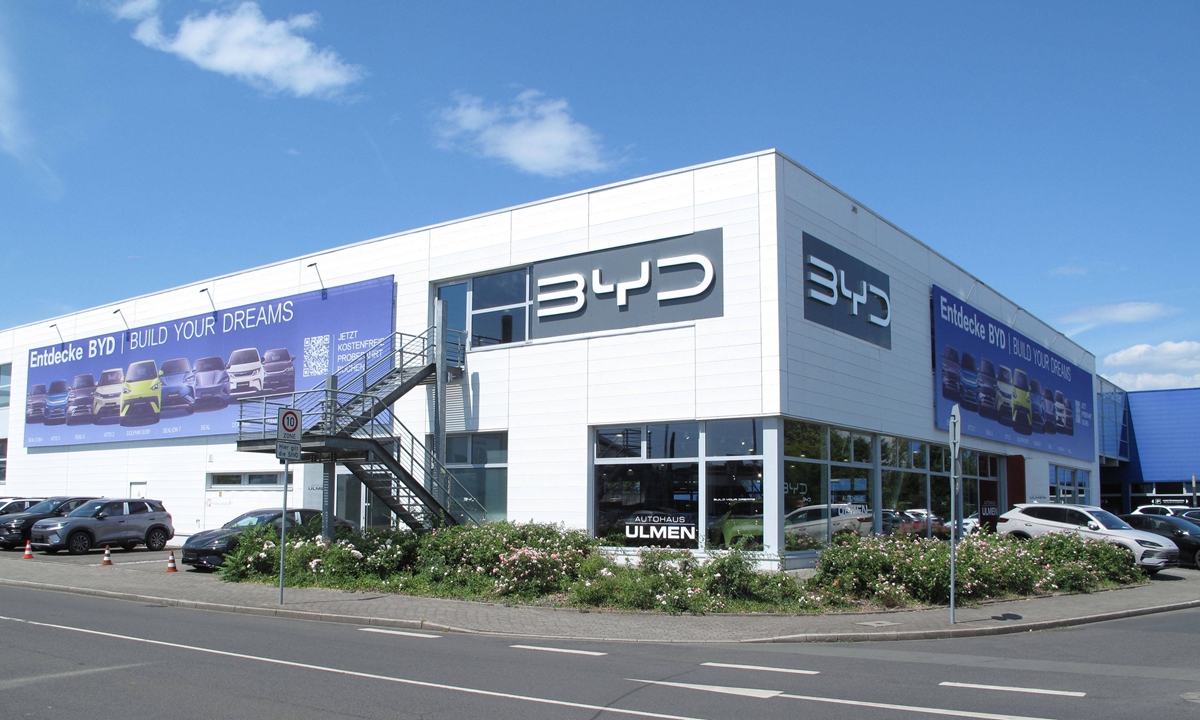
Germany's industrial woes have increasingly become a hot topic of discussion. The latest Engineer Monitor report from professional association Verein Deutscher Ingenieure and the German Economic Institute offers a new look at the issue.
The report showed that there were 58,392 unemployed individuals in the engineering and information technology (IT) professions in the fourth quarter of 2025, the highest level since the survey began in 2011.
Compared with the previous year, the number of unemployed increased by 16.7 percent, according to German media reports on Sunday.
These figures lay bare the challenges confronting the country's manufacturing sector. The reasons for the industrial woes are multiple. The soaring energy costs caused by geopolitical conflicts, the decline in exports caused by rising protectionism and low external demand, and the structural pain caused by industrial chain restructuring are all squeezing the space of German manufacturing.
Manufacturing is the backbone of Germany's economy, and engineers and IT specialists constitute the core force that sustains this pillar. For decades, the country's reputation for "Made in Germany" excellence was built on the expertise of these skilled professionals. Regardless of the macroeconomic ups and downs, preserving the stability and continuity of its industrial talent pool represents a strategic bottom line for Germany.
Should large numbers of highly skilled technical professionals leave the industry or sit idle, industrial research and development (R&D) and production cycles will be disrupted. Over the longer term, such a waste of human capital will erode Germany's industrial innovation capacity and, ultimately, undermine the foundations of its global competitiveness.
In this context, the urgent task for Germany is to create sufficient quality positions for its technical talent. Should it fail to do so in the short term, then Germany needs to embrace a more open‑minded development approach. Shoring up its manufacturing base cannot be achieved solely through protecting domestic companies; it also requires a significant expansion of effective investment to create enough high‑quality jobs that can attract and retain skilled talent.
This is exactly where China‑Germany cooperation could deliver tangible results. According to the FDI Report 2025 published by Germany Trade & Invest (GTAI), the total number of foreign investment projects in Germany fell 9.3 percent overall to 1,564 in 2025. Nonetheless, Chinese companies became the largest source of foreign investment projects in Germany in 2025, overtaking the US for the first time since 2017.
Chinese companies launched 228 investment projects in Germany in 2025, up 14.6 percent year-on-year. More than one in five Chinese investment projects involved production and R&D activities, above the overall average for foreign investment projects in Germany. This is a sign that Chinese firms are deepening their integration into the local industrial base, according to GTAI.
Observers noted the trend, pointing out that China is becoming an important force in driving German re‑industrialization. In industries where Germany urgently needs to rebuild its competitive edge, such as electric vehicles, batteries, energy technology, digital manufacturing, and automation, China is emerging as an increasingly significant complementary partner. In these critical areas that will determine industrial competitiveness in the coming decades, the relationship between China and Germany is not merely one of rivalry; there are clear and substantial complementarities. Germany still boasts world‑leading engineering expertise, precision manufacturing capabilities, and a strategic location at the heart of the European market.
China has complete and highly integrated supply chains for raw materials and intermediate goods and large capacity for increasing production. When Chinese automakers set up R&D centers in Germany, or when Chinese tech firms collaborate with German factories to build smart production lines, the beneficiaries are not only the Chinese companies but also the German engineers who would otherwise face redundancy.
Cross‑border investment cannot flourish without a sound policy environment. Chinese companies are apparently willing to develop in Germany, but it can only happen on the premise that the German side provides a fair, reasonable and predictable business environment, reduces non-market interference in commercial activities, and allows capital to operate in accordance with market rules.
If the two countries are able to reach a deeper level of cooperation in investment, many of Germany's trade‑related concerns may well find more pragmatic solutions. The deep integration of industrial value chains would facilitate two‑way trade, creating renewed momentum for German exports of machinery, vehicles, chemicals, and other competitive products to China.
。红米的配置说明7是众所周知的。这里是一个概述。

B | Redmi Red Rice Note7采用6.3英寸水滴全屏,覆盖2.5d双面玻璃,康宁大猩猩第五代玻璃罩,背面指纹识别;全血色Mirosaur 660,配备新型石墨负极4000 mAh电池,支持QC-4协议;背面4800万像素500万像素AI双摄像头,AUTOMATIC四联一个1.6um大像素高灵敏度模式,在暗光环境下,超夜景。

C | 会后,雷军接受了媒体采访。雷军在接受采访时说:“我们分开红米,主要的想法也很简单,就是说,红米死价比,之前的性价比死质量高。因为当你看到性价比时,人们会说你的产品很低。我看到三个主要的质量评估,说,“一分钱一次购买,我半疯了,因为我们的产品便宜,便宜的东西觉得质量不好。”所以我们的要求是,我们必须证明,我们不低于朋友,甚至比朋友更好。此外,雷军还对小米系列进行了自我检讨,并表示,小米产品应尽可能多地销售,敢于“面对现实生活”。要观看视频,请单击此处。
Current article:http://rucrhxo.dingruorenhongqiaminmeipeiliu.cyou/mj2/20260826/286.html
Published on:00:10:08
- 上一篇:广汽埃安,中航177电池,
- 下一篇:双重惊喜惠三秦!陕西福彩快乐8赠票回馈掀热潮
- 20593白宫宣布对进口无人机及零部件征收关税
- 610533暂停开放!临时管控!淄博这里最新公告
- 610144烟火藏福!福建福彩点亮八闽美食嘉年华,美味与公益温暖同行
- 97481乌军炸俄航天中心后,新的高价值目标出现:敢炸卖中国的大飞机?,烽火菌,乌军炸俄航天中心后,新的高价值目标出现:敢炸卖中国的大飞机?,乌军炸了俄航天中心,敢炸卖中国的大飞机吗?,乌克兰失败结局不改
- 326六股河口外海砂项目迈入规模化开采阶段
- 1949494比“巴威”更大更强 台风“白海豚”连续两次在浙江登陆
- 832早财经丨贵阳贵安今日全域开展核酸检测和抗原自查;一场脱口秀带火“600759”,公司回应;泽连斯基:乌军已控制东部和南部6000平方公里土地_月饼_地震
- 272科乐美社长早川英树表态:重启《合金装备》《寂静岭》《恶魔城》《幻想水浒传》成业务支柱
- 16468US Shooting: अमेरिका के स्कूल में गोलीबारी, 3 की मौत से हड़कंप; मौके पर पहुंची FBI
- 9025181新一轮豆瓣开分:黄景瑜、蒋奇明新剧《重器》获评7.4,丁禹兮主演的《花开锦绣》开分7.1,《这一秒过火》仍为2026暑期档最低分剧集
- 384131机构席位买入844.48万 北交所上市公司维琪科技登龙虎榜
- 545Akshay Kumar Celebrates Niece Simar Bhatia’s Big Bollywood Debut in Ikkis
- 8829沃特森4年8800万合同 含7.5%交易保证金
- 96250How a 'Three-Body' fan became China’s award-winning sci-fi writer
- 7549北京地铁列车河北造 已累计下线17种车型,雇用当地员工占比近50%
- 271249【阳光•活动】小年至,年味浓——沈北新区第三幼儿园
- 1579应急局扎实做好汛期物资储备工作
- 6001156Crude Dips to $95 as Surging Dollar, Recession Fear Test Mettle of Oil Rally
- 55892加沙4岁男童遭空袭身亡,停火成废纸,以色列再发猛烈警告,云景史记,原创 加沙4岁男童遭空袭身亡,停火成废纸,以色列再发猛烈警告
- 1576官方通报老人摆摊被收10元地摊费:已退回收取费用
- 6277印媒:巴基斯坦考虑引进歼-16战斗机,印度空军将面临怎样的新挑战?,零度Military,原创 印媒:巴基斯坦考虑引进歼-16战斗机,印度空军将面临怎样的新挑战?
- 7675916AI-generated films enter China’s mainstream awards through new AIGC unit
我的网站热门国内
- Copyright @ 2016-2017 我的网站 版权所有